Outdoor LED Screens in Hot Climates: What Gulf Buyers Should Check First
Buying an outdoor LED screen for the Gulf? Check brightness, heat and power, dust and rain sealing, and viewing distance first — before you compare prices.
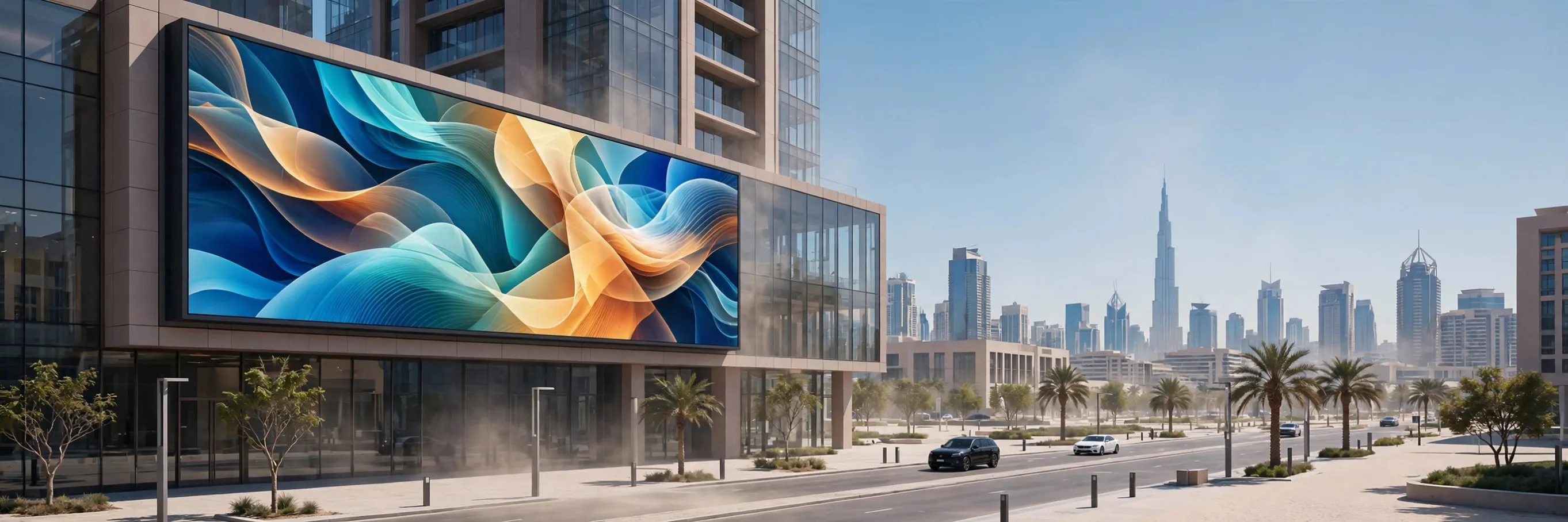
A screen that looks bright in a showroom can disappear at noon on a Dubai facade.
That is the first thing to understand about outdoor LED in the Gulf. The sun is stronger, the air carries dust, and the screen runs for long hours in the heat. A buying decision that works in a mild climate can fail here — not because the screen is bad, but because it was chosen for the wrong conditions.
This guide covers the four checks that matter most before you compare prices: brightness, heat and power, sealing against dust and rain, and viewing distance.
1. Brightness: Buy for Noon, Not for the Showroom
Brightness is measured in nits, and for outdoor screens it is the first number to get right.
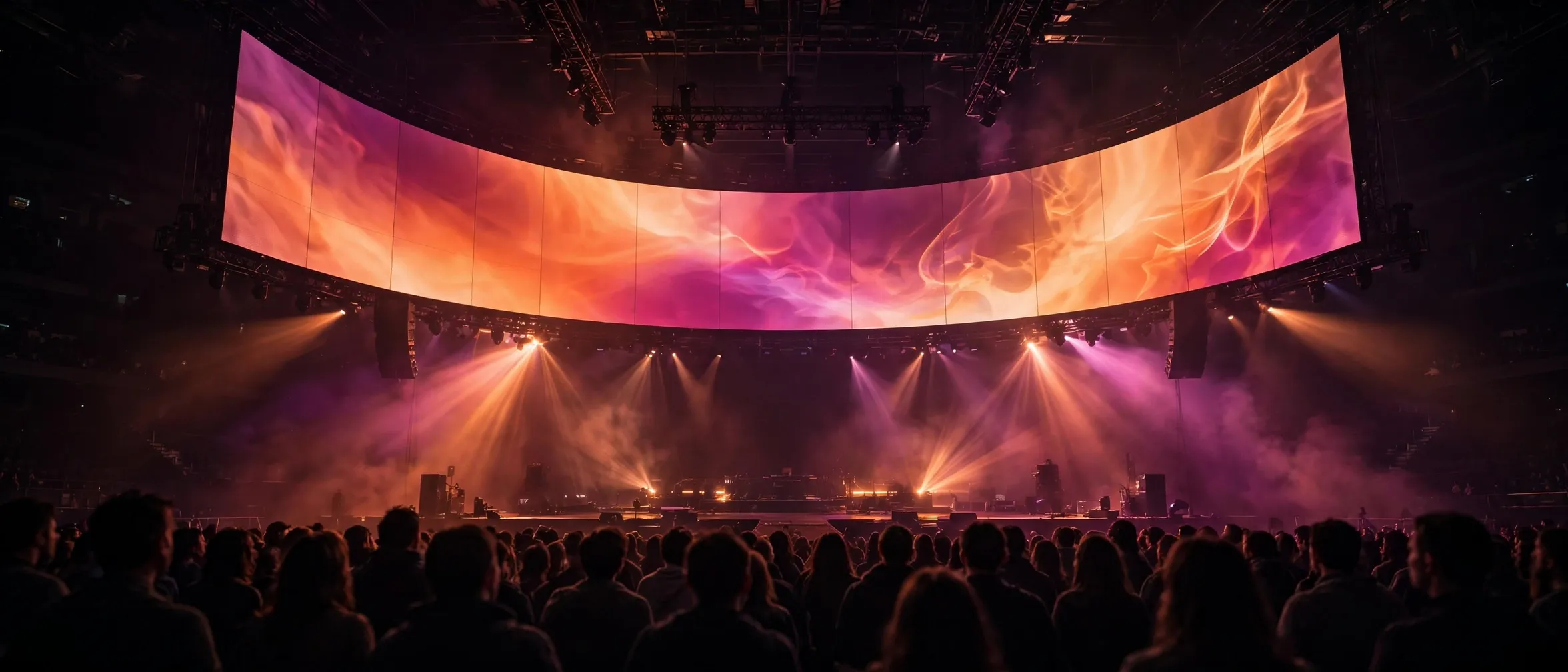
A screen facing direct sun needs far more brightness than one in shade. Our outdoor lines start at 4,500 nits — our outdoor rental cabinets are rated at 4,500 nits or higher, and our outdoor poster display runs at 4,500–5,000 nits. Our energy-saving outdoor fixed line goes up to 10,000 nits for the brightest, most exposed positions.
That does not mean always buying the brightest screen. A screen under a canopy, or one that faces away from the afternoon sun, may not need the top of the range — and brightness you do not need is power you pay for every day.
Ask the supplier one question before anything else: what brightness do I need for this exact position, at midday, in summer? If the answer is a single number with no question about orientation or shading, the screen has not been sized for your site.
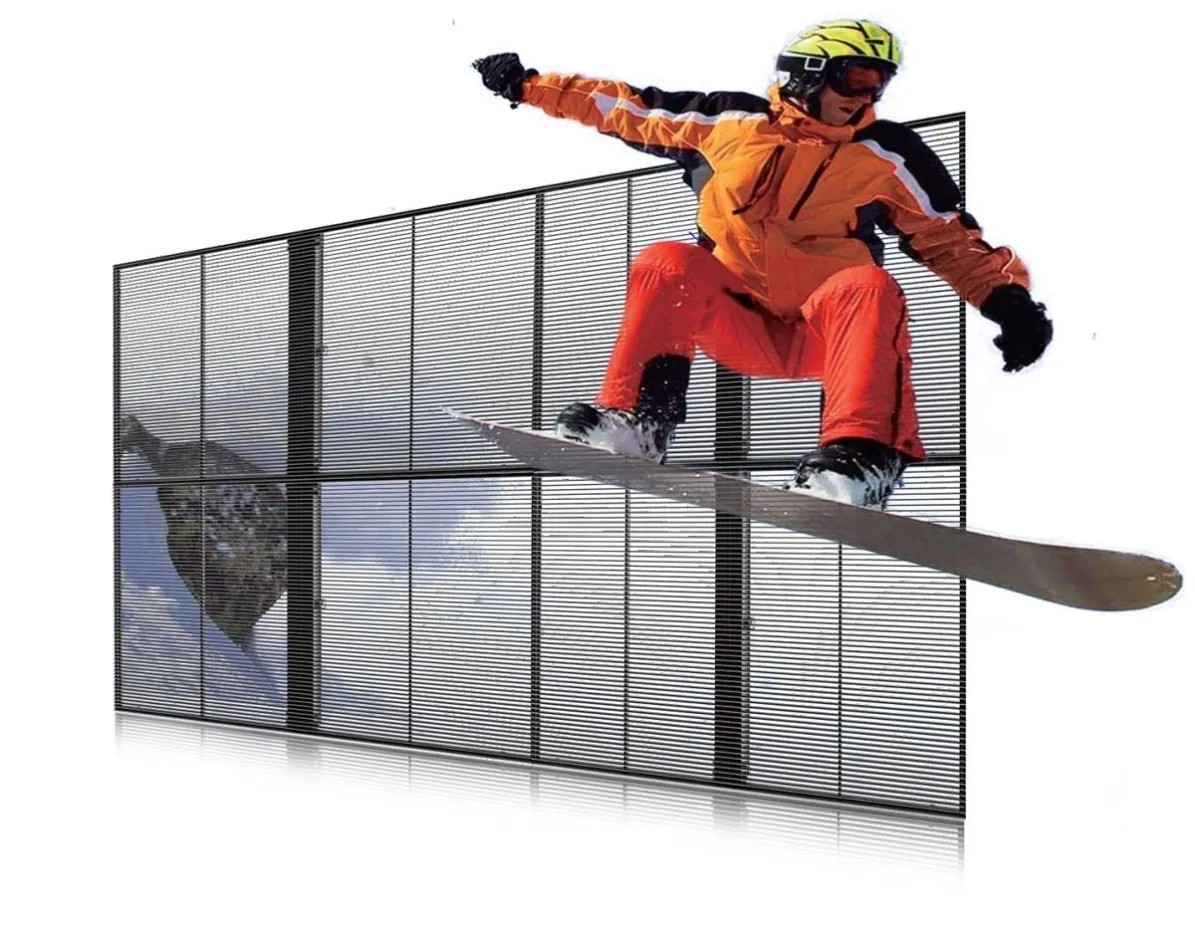
For a glass facade, the answer is different again. Our outdoor grille screen runs at 800–5,500 nits with 30%–50% light transmission, so the building behind it still gets daylight while the picture stays visible. Brightness and transparency have to be balanced together — one without the other is the wrong screen.

2. Heat and Power: A Bright Screen Is Also a Hot One
Every extra nit costs power, and power becomes heat. In a hot climate, that matters twice: once on the electricity bill, and once in how hard the screen has to work to stay reliable.
This is where an energy-saving design earns its place. Our energy-saving outdoor line uses up to 30% less power than a conventional panel, in 1000 × 1000 mm aluminium cabinets at only 22.5 kg. Less power in means less heat to get rid of — and a lighter cabinet is easier to install and service on a facade.
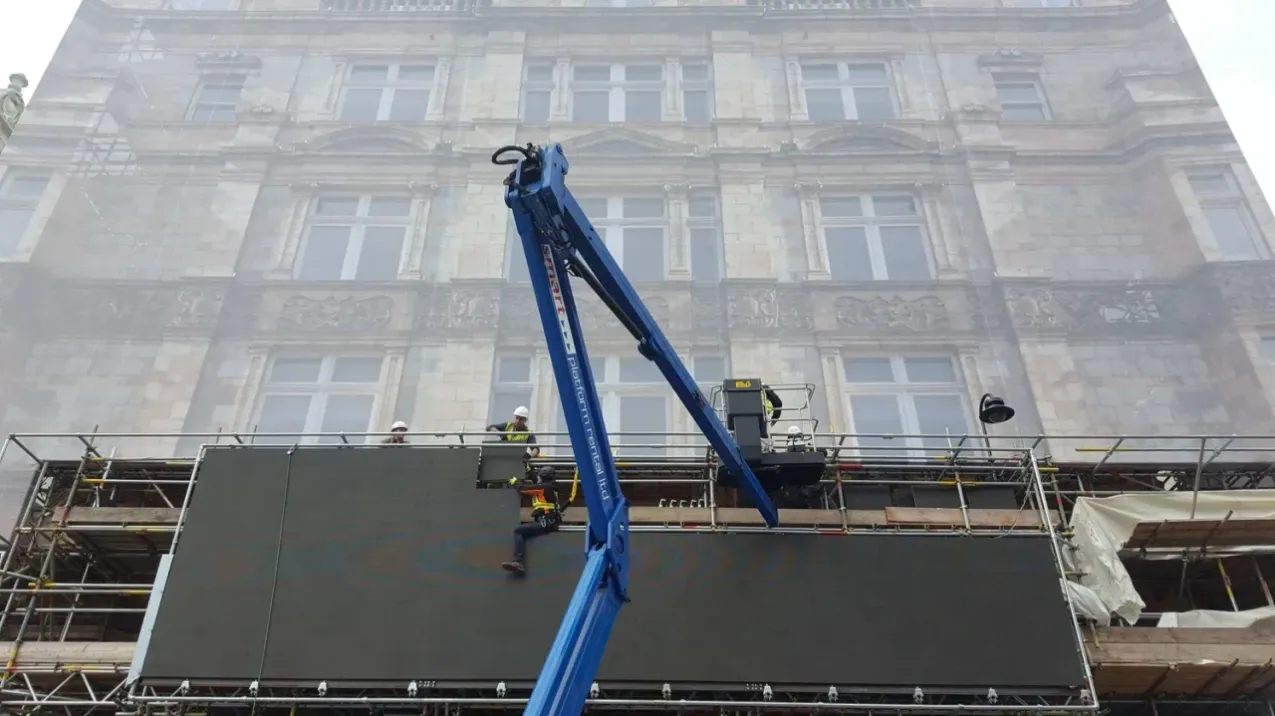
Before you buy, ask how the screen is cooled and serviced. Can modules be reached from the front, the rear, or both? Is there a plan for cleaning dust off the surface? A screen that cannot be serviced easily will not stay bright for long, however good its first-day picture is.
And check the refresh rate if the screen will appear on camera — in advertising footage, event coverage or social media. Our lines refresh at 3840–7680 Hz, which keeps the picture clean on broadcast cameras and phone footage alike. Our article on LED wall flickering on camera explains what to collect before a camera test.
3. Sealing: Dust Gets In Where Rain Cannot
In the Gulf, dust is the everyday problem and rain is the occasional one. A screen needs protection against both.
Look for IP65 sealing front and back, not just on the front face. Our outdoor rental cabinets and our energy-saving outdoor line are both sealed IP65 front and rear, and our outdoor grille screen is glue-sealed to IP65. That is the level to ask for on any screen that will live outside year-round.
A second question is what the seal protects. Fine dust finds its way into connectors, cabinets and cooling paths. Ask the supplier how the cabinets are sealed, how often the screen should be cleaned, and what happens if a module needs replacing — can it be swapped on site, or does the whole cabinet come down?
If the screen is for a temporary event rather than a permanent facade, the same rule applies for the days it is up. Our guide on how to choose a rental LED display covers indoor and outdoor rental by venue, viewing distance and setup speed.
4. Viewing Distance Decides the Pixel Pitch
Pitch is the distance between LED pixels, and it decides how close a viewer can stand before the picture breaks into dots.
For outdoor advertising and large facades, the nearest viewer is usually far away — across a street, a plaza or a highway. A coarser pitch is often the right choice there: it keeps the cost per square metre down without losing visible quality. Our energy-saving outdoor line covers P2.976–P10.42, so the pitch can be matched to the distance instead of guessed.
Finer pitch is for close viewing: a storefront poster, a screen above a shop entrance, a display people walk past at a few metres. Our outdoor poster display covers P2.5–P5 for exactly that kind of position.